The Frightened And The Ignorant: A Pyscho-Analytical Analysis Towards BJ Patino's Apo On The Wall
"Apo On The Wall" seemed to be a poem about the impact of war.
At first glance, the poem was about a child narrating of how strict his father was of not allowing his child to be in his office. So, with the description such as "green uniform", "colored breasted plates", and rifles and such, it pretty much gave away that his father served - or is still serving - the military. Of course, the first thing that came to me was that the main theme was war. However, the ending threw a curveball.
The Curveball
Sure, Apo was the first focus of the poem, until it transferred to how the child saw his father, but Apo kind of faded in the middle. On my first read, I didn't exactly pay attention to Apo, for all I cared, I thought it was a filler, until the ending got super creepy. It made me confused because why would the author end it there. Plus, the author didn't really reveal obvious points that could pinpoint to who he was referring to. So I did my research and my oh my was it gobsmacking.
Who the heckie is Apo?
Based from the first search I found from Google, which was also an analysis towards this poem, Apo is... (drum roll)
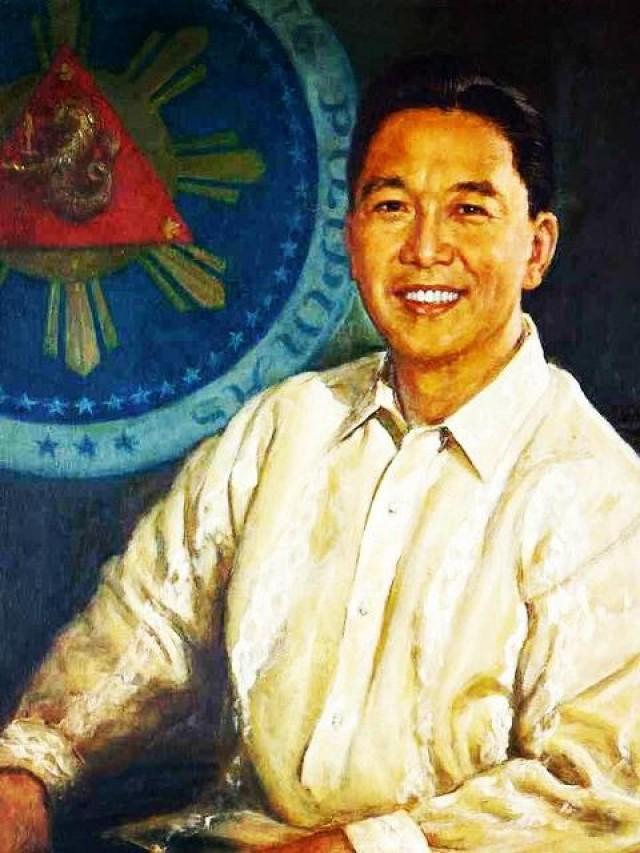
This guy.
Yep, Apo is Ferdinand Marcos in the poem. And it makes total sense. For one, as I'm typing this while I'm simultaneously researching about it, Ferdinand Marcos' nickname back then, although not nationally known, was Apo Lakay, a nickname given by his Ilocano supporters. And whenever you hear his name, there's always this word that pops up that will forever be associated with him: the Martial Law.
Apparently, it's not a poem about war.
The poem is literally the embodiment of how the Filipinos felt back then under the Martial Law: no freedom. We were always under surveillance, we were restricted from a lot of things, and we couldn't do anything under this dictatorship. The father is/was serving the government since he has a portrait of Ferdinand Marcos or Apo up on his wall so "to make sure he's snappy", as if he's always on his guard. Although the father didn't really show any other emotions aside from being stern, this situation could go both ways: either he completely respected his boss to the point that he literally put up a portrait as if he's making a shrine, or he's afraid of his boss.
The child is literally what almost every Filipino was experiencing in this era. And the fact that the child described him as a "scary Jesus", Jesus, the Biblical figure who is 100% man and 100% God, and being God meaning being all-knowing, makes Apo all-knowing. He was that powerful. He was that scary.
Analysis Time!
Now we've got those covered, I focused on the symbolism and attempted to dig deeper. So, with my initial instincts, I searched up the author's biography. Patino was born in 1927 and died in 1988, which has the timeframe when the Martial Law began and ended. The Martial Law started on 7:17 P.M. of September 23, 1972 and ended on February 25, 1986, two years before his death. And with deductions and evidences, I firmly believe that this poem was created in the middle or right after the Martial Law.
I decided to use Pyscho-Analytical Theory as I thought of a theory and, it's a reach, but what if the father and the child symbolizes the generation who experienced Martial Law and the generation after that?
Asides from the "I know what you're doing" and all that fear and stuff, I looked at the possibility for this symbolism. The father knows well of his boss, considering that he is his boss after all, so of course he'd experienced everything first-hand. The narrator (the child) doesn't really particularly know who Apo is except that he's his father's boss. But he does know that he's being watched. Or, at least, has that knowledge that Apo watches. And he feels that he's scary. And without acknowledging a piece of information first, you wouldn't really feel something towards it, right? Or even used a few minutes of your life thinking or discussing about it.
So, what if the father symbolizes the Filipinos who lived through these times? And the child would be us, mostly Generation Z. As mentioned earlier, I noticed that the father wasn't showing any emotions asides from being robotic and "snappy" at the child when he went and snooped around in the office. So he could either be a man of respect or a man filled with fear.
As for the child, here's how it starts: we only know what Marcos did through textbooks and accounts, and mayhaps we lack complete knowledge about it because we weren't there to see both sides of the coin. But either way, to experience it first-hand would make the view on it drastically change. But almost everyone know that those times were, in fact, scary. So, what if that's what Patino also wanted to convey? That because of this event, it will forever affect the past, the present that time, and the future. Because of how the Martial Law went very, very downhill, the Filipinos reacted violently when President Duterte announced Martial Law in Mindanao when there was a terrorist attack. That because of what Marcos did, fear is instilled us, that it may happen again. That even us, the children, who should not be afraid, can't help but be afraid.
So, what if the father symbolizes the Filipinos who lived through these times? And the child would be us, mostly Generation Z. As mentioned earlier, I noticed that the father wasn't showing any emotions asides from being robotic and "snappy" at the child when he went and snooped around in the office. So he could either be a man of respect or a man filled with fear.
As for the child, here's how it starts: we only know what Marcos did through textbooks and accounts, and mayhaps we lack complete knowledge about it because we weren't there to see both sides of the coin. But either way, to experience it first-hand would make the view on it drastically change. But almost everyone know that those times were, in fact, scary. So, what if that's what Patino also wanted to convey? That because of this event, it will forever affect the past, the present that time, and the future. Because of how the Martial Law went very, very downhill, the Filipinos reacted violently when President Duterte announced Martial Law in Mindanao when there was a terrorist attack. That because of what Marcos did, fear is instilled us, that it may happen again. That even us, the children, who should not be afraid, can't help but be afraid.
The Conclusion
The poem is brilliant. It's a testimony. It may not be as explicit as the other accounts, but seeing how he used a child and how he used these simple yet very effective words - it made a huge impact. It's soul-crushing. And I do believe that he used these sets of words from how he felt but with a vocabulary of a child's. Plus, because of how the author didn't really reveal details about these characters, it's interesting of how people from this generation and that generation would initially react when reading it the first time. I, for one, didn't think it was about Martial Law on my first read at all, making me the "child" of the story. I bet it'll be the opposite when someone who experienced through all of that reads it.

No comments:
Post a Comment